Edit
Strumlet
An AI-powered iOS app that turns songs into playable guitar chord charts.
Connect your AI agent
Claude Code, Cursor, Codex…
3
Notes
AI Song Simplifier
The AI Song Simplifier transforms any song into a version tailored to the guitarist's skill level.
PRD Bridge
Get Started Creating Your PRD
Select the type of Product Requirements Document to generate
Frontend / UIcreated
Requirements for interface & frontend features
Backend Features
Requirements for backend logic & API endpoints
Database Design
Requirements for schema & data models
Frontend PRDv2
Song Search & Import
1. Purpose
Let users find or supply a song (YouTube link, local audio, or live recording) so Strumlet can generate a playable chord chart.
2. Behavior
User navigates to the "Upload" screen from a global tab, e.g. a "+" or "Upload" tab.

Turn a rough idea into a plan your agent can build.

Mapwright maps your app into features and turns any of them into a one-click, build-ready spec, so Claude Code, Cursor, and friends build from a real plan instead of guessing.

3 days free · No charge until your trial ends · Plan your first app in minutes

Works with the tools you already use

Claude CodeClaude Code
CodexCodex
CursorCursor
Gemini CLIGemini CLI
GitHubGitHub
NotionNotion
Google DocsGoogle Docs
Claude CodeClaude Code
CodexCodex
CursorCursor
Gemini CLIGemini CLI
GitHubGitHub
NotionNotion
Google DocsGoogle Docs
Claude CodeClaude Code
CodexCodex
CursorCursor
Gemini CLIGemini CLI
GitHubGitHub
NotionNotion
Google DocsGoogle Docs
Claude CodeClaude Code
CodexCodex
CursorCursor
Gemini CLIGemini CLI
GitHubGitHub
NotionNotion
Google DocsGoogle Docs

Why Mapwright

Stop re-explaining your app every single session

Every new agent chat starts from zero: you re-explain the app, it guesses the data model and guesses wrong, and “add a settings page” costs three rounds of back-and-forth. Mapwright keeps the plan outside the chat: a living map, specs generated from it, and an ordered backlog your agent reads and writes directly.

Every new chat

↺“so, my app does…” again
!agent guesses the schema
?“add a settings page”
WPRD-draft.docx
✕chat closed, context gone

In Mapwright: ordered by build order

To Do

2

#1 Song Search & Import

Let users find or supply a song so Strumlet can generate a chord chart.

Highfrom Frontend PRD

#2 Chord Diagram Renderer

Render the chart in sync with the song's playback position.

Mediumfrom Frontend PRD

Done

1

#1 Connect AI Agent

Wired up Claude Code to read and write the map directly.

Lowadded by your agent

Try dragging the cards between columns

Four steps

Building your first idea

From a rough thought to an agent building against a real plan. Here's the whole path.

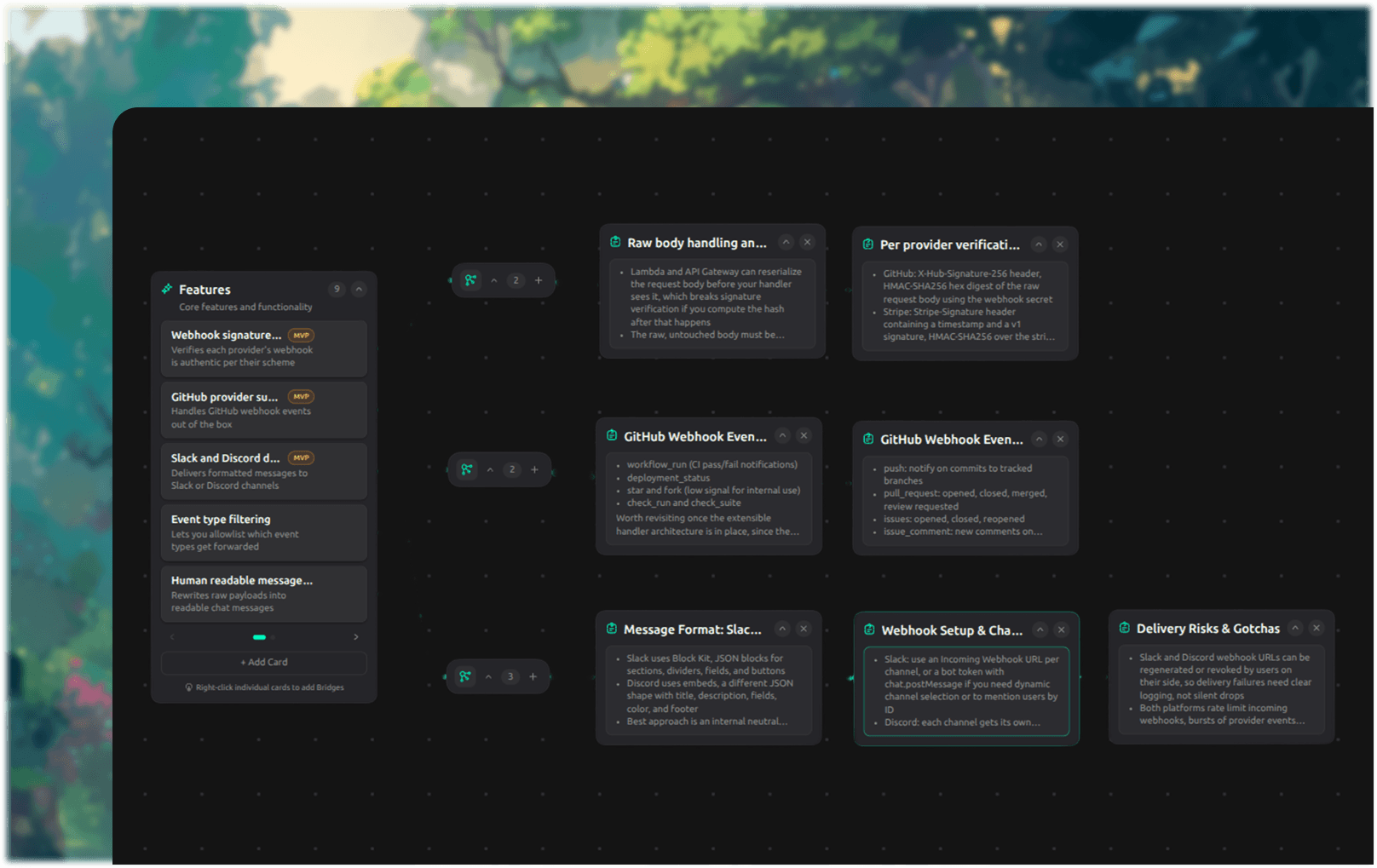
01Map your idea

Everything your app does, on one canvas

Lay the whole thing out before a line of code exists. You do the thinking, the agent does the typing.

Core features
Set out what your app actually does.
Sub-features
Break each one down into the details.
Specialist notes
Capture how every feature should work.
Mapwright's canvas showing a project's features laid out as connected cards
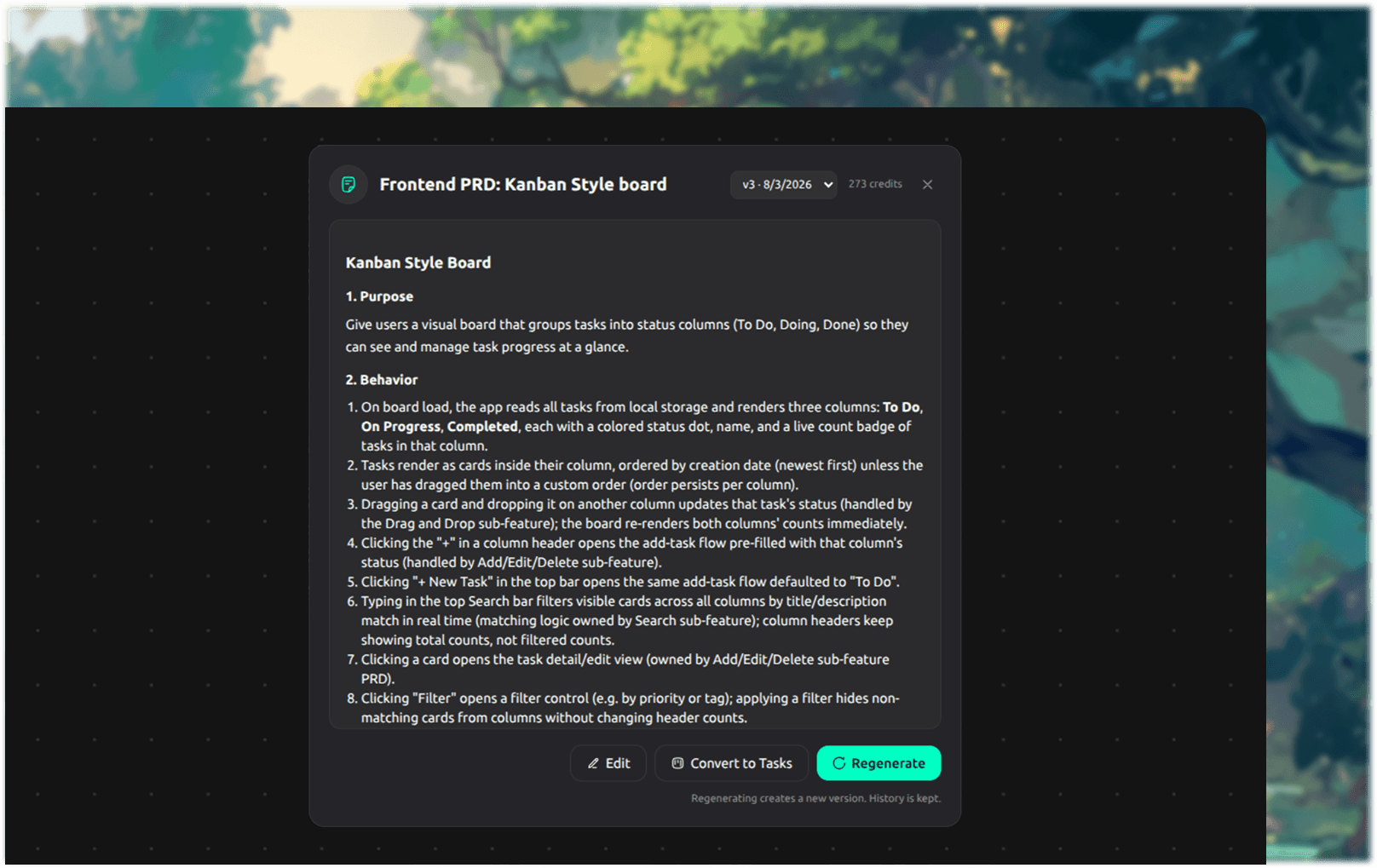
A generated PRD document for a selected feature
02Create PRDs

Any feature, specced in a single click

Choose a feature on the map and Mapwright writes the spec from it, using the context you already captured.

Pick your angle
Frontend and UI, backend logic, or database design.
Written from the map
Context comes from the feature, not a blank prompt.
Kept in version
Regenerate as the feature moves on.
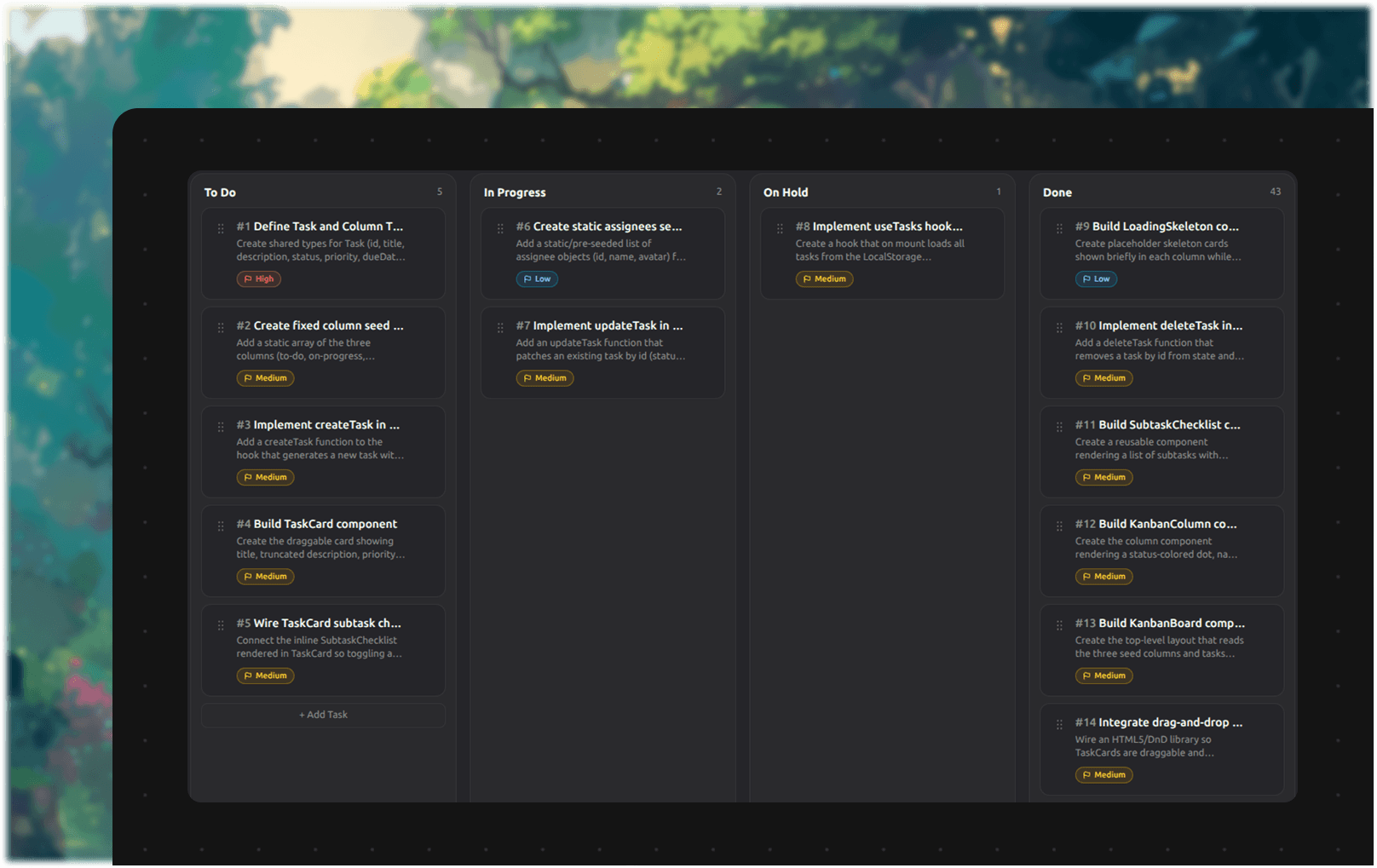
03Convert to tasks

A backlog that already knows the build order

Turn a finished PRD into numbered work. Nothing gets picked up before the thing it depends on.

Ordered by dependency
Numbered so the sequence is never a guess.
Priority and provenance
Every task shows where it came from.
Move it as it lands
Drag work across the board as you go.
The Tasks board with cards organized into To Do and Done columns
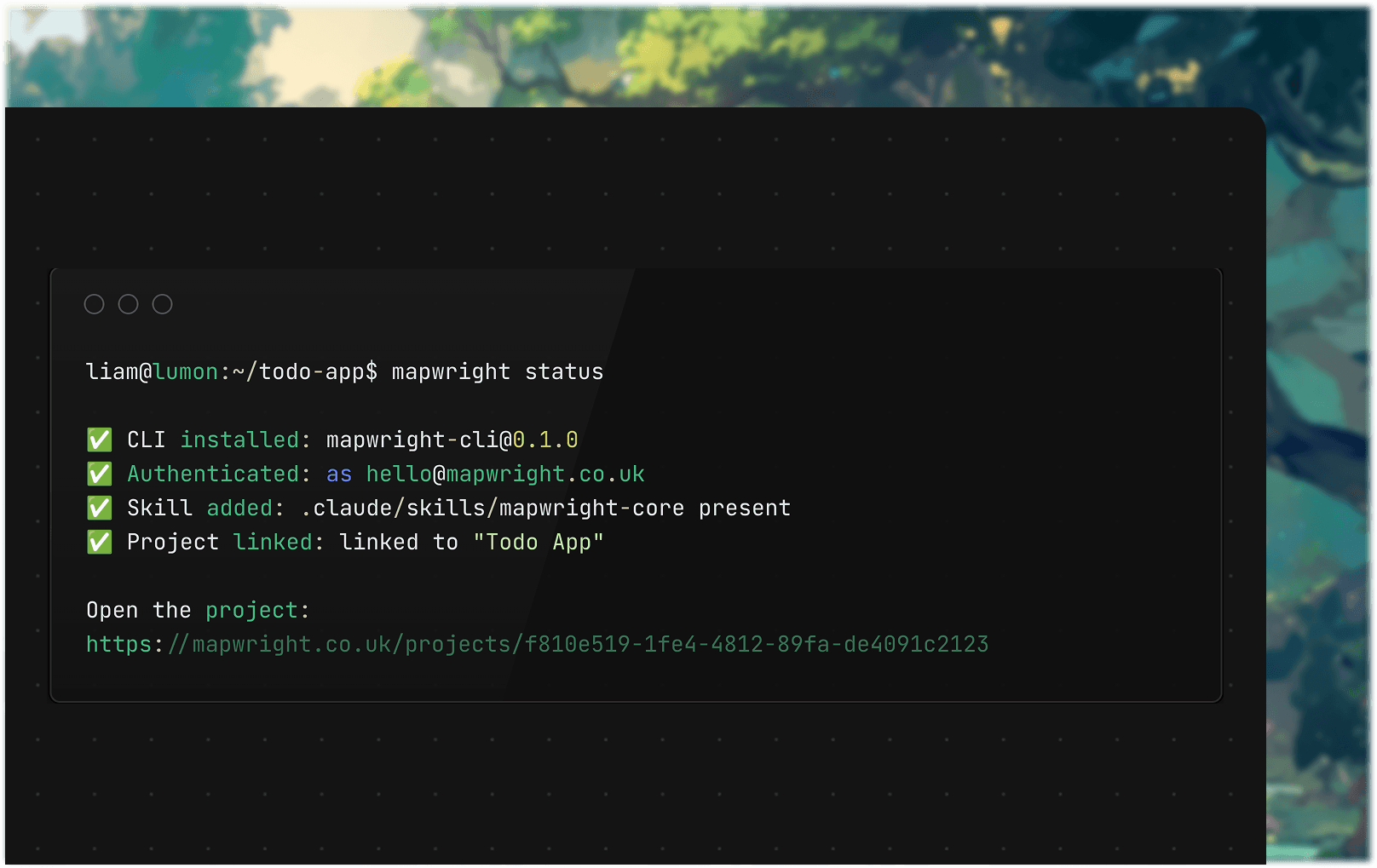
The Mapwright CLI connected to a project in a terminal
04Connect your agent

Your coding agent reads the plan directly

Point the CLI at your project once. From then on the agent works from the map, the specs and the backlog.

One command
No copy and paste between windows.
Any of your tools
Claude Code, Cursor, Codex, Gemini CLI.
Writes back
New features it discovers land on the map.

Pricing

Plan an app, hand it to your agent.

Two plans, one trial. Start free for 3 days, cancel anytime before it ends and you won't be charged.

Studio

£29.99/month

For teams building together.

5 users included
50,000 credits / month

Everything in Maker, plus

Organisation workspace
Start free trial

Anytime cancellation

A credit is what your AI agent spends when it works for you: generating a spec, chatting through your plan, or importing a repo uses a few. Adding cards, dragging the map, and writing notes by hand is always free.

Questions, answered

Can't find what you're looking for? Reach us at hello@mapwright.co.uk.

What's a credit, and what actually uses one?

A credit is what your AI agent spends when it works for you: generating a spec, chatting through your plan, or importing a repo all use a few. Manually editing your map, dragging cards around and writing notes is always free.

Is there really no free tier?

Both plans include a 3 day free trial instead. You won't be charged if you cancel before the trial ends, and you can cancel anytime from your account's billing settings.

Can I cancel anytime?

Yes. Head to your account's billing settings and manage or cancel your subscription directly, no emailing support required.

Which AI coding agents does Mapwright work with?

Claude Code, Cursor, Codex and Gemini CLI today, connected through our own CLI and Skills rather than an MCP server. Any agent that can read a SKILL.md file and shell out to a command can use it.

Do I need to install anything to start planning?

No. Building your map happens entirely in the browser. The CLI is only needed once you want your agent to actually read from or write to your plan.

What's the difference between Maker and Studio?

Maker is built for one person: unlimited projects and 10,000 credits a month. Studio adds Organizations, so you can invite up to 5 teammates into a shared workspace, with 10,000 credits per seat.

Is my data private?

Every project is scoped to your account with Row Level Security enforced at the database level, not just in the app's code, so even a bug in our own code can't return someone else's data.

Start building today

Turn your idea into a map your AI agent can build from, free for 3 days.

Start building today